59A7D41EB44EABC4F2C2B68D88211BF4 UAE INSIDER - BUSINESS | LAW | CAREERS | INVESTMENT

Sunday, December 27, 2015

⚖️ Sponsoring Parents in the UAE: The 2026 Legal Framework, Salary Thresholds, & Step-by-Step Process

Are you planning to secure a residence visa for your parents in the UAE? The regulatory framework governing family sponsorship has shifted dramatically. Relying on legacy rules can result in immediate application rejection at typing centers or GDRFA platforms.

Here is the definitive, legally compliant blueprint for expatriates sponsoring their parents, updated with the active Federal Authority for Identity, Citizenship, Customs and Port Security (ICP) and General Directorate of Residency and Foreigners Affairs (GDRFA) mandates.

🛑 The Structural Shift: Old Rules vs. Modern Mandates

The historical thresholds that allowed sponsors to apply with lower salary bands have been permanently replaced. Furthermore, the massive, historical AED 20,000 security deposit is no longer a standard operational requirement under the streamlined digital immigration framework.

ParametersHistorical Framework (Obsolete)Modern 2026 Statutory Framework (Active)
Minimum SalaryAED 6,000 (with housing) / AED 7,000 (without)AED 20,000 gross monthly salary OR AED 19,000 + a certified 2-bedroom apartment.
Dependency RuleCould apply for individual parents easily.Joint Sponsorship Mandate: You must sponsor both parents together unless you provide official proof of divorce or a death certificate.
Security DepositAED 20,000 refundable cash deposit.Abolished / Replaced by standard file opening and nominal digital processing fees.
Housing MandateNo strict structural layout audit.Minimum 2-Bedroom Ejari/Tenancy registered and certified via local authorities (DLD/Municipality).

📂 Phase 1: Securing the Entry Permit (The Humanitarian Appeal)

Sponsoring parents is treated fundamentally as a humanitarian visa. You must prove to the GDRFA/ICP Approval Committee that you are their sole provider and that no one remains in your home country to care for them.

Required Documentation for Entry Visa:

  • Sponsor’s Credentials: Original Passport, valid Emirates ID, and a certified Labour Contract (or an official digital Salary Certificate).

  • Parents' Credentials: Clear passport copies and recent passport-sized photographs.

  • The Dependency Affidavit: A formal relationship and dependency certificate issued by your home country’s embassy or consulate, strictly attested by the UAE Ministry of Foreign Affairs (MOFA), proving you are their sole financial caretaker.

  • Accommodation Proof: A certified registered tenancy contract (Ejari in Dubai or Tawtheeq in Abu Dhabi) explicitly stating a minimum of 2 bedrooms, alongside a matching utility bill (DEWA/SEWA/ADDC).

    • Note: If the contract type is ambiguous, a formal affidavit from the landlord confirming the 2-bedroom layout is required.

Operational Step:

Take these documents to an authorized typing center (Amer/Tasheel) or log directly into the official GDRFA/ICP digital portals. Submit the file along with a formal Humanitarian Appeal Letter written in Arabic. The internal Approval Committee will review, confirm, or reject the application—typically within 2 to 14 business days.

🏥 Phase 2: Status Change & Residence Visa Stamping

Once the Entry Permit is granted and your parents enter the UAE (or undergo an in-country status change), you have a strict statutory window of 60 days from the date of entry to finalize the residency stamp.

Required Documentation for Final Residency:

  • Original Passports (Sponsor & Parents) + the approved Entry Permit.

  • Medical Fitness Test: Parents must clear the mandatory medical screening at an approved government health center.

  • Mandatory Health Insurance: You must secure a valid health insurance policy for each parent. To comply with basic safety nets, policies must feature a minimum coverage framework (typically starting at a premium cost layout of approximately AED 600 to AED 1,200 per year, depending on age and medical history).

  • Emirates ID Biometrics: Complete the typing application and biometrics protocol for their physical Emirates IDs.

The Outcome:

Upon submission of the health clearance and insurance metrics through the digital Amer or ICP channels, the residency visa is approved. Physical Emirates IDs are subsequently dispatched via official courier networks (Empost) directly to your corporate or residential address.

🛡️ Pre-Application Checklist for Strategic Advisors & Expats:

  1. Do Not Blend Contracts: If your salary is split between multiple entities, ensure your primary registered MoHRE contract meets the AED 20,000 mark cleanly.

  2. Attest Early: Consular dependency certificates take time. Ensure the MOFA attestation sticker is physically on the document before submitting the file to Amer or GDRFA.

  3. Check Your Ejari: Single-bedroom or studio apartments face instant, automated system rejection for parental sponsorship.

How are you navigating family residency compliance for your corporate executives or household structures this quarter? Let’s discuss compliance workflows in the comments below! 👇

#UAELaborLaw #FamilySponsorshipUAE #GDRFA #ICP #DubaiResidency #SharjahLiving #ExpatCompliance #UAEImmigration2026


Friday, December 25, 2015

Dubai Public Private Participation Law –PPP Law- Attract more private investment in 2016

Dubai New PPP Law draw more private investment into infrastructure projects in 2016, through the law, Dubai will be able to invite private companies and investors to finance and operate assets that otherwise would have been funded by government budgets.

With oil prices dipping below US$40 a barrel this month, the time to rely on private sector money may be more urgent that ever before not only for the UAE but for all Arabian Gulf countries.

With the IMF warning that some regional economies could use up their financial buffers within five years as they face a combined fiscal deficit exceeding $700 billion between 2015 and 2019, the incentive to go for PPP is urgent. Even Kuwait has revamped its PPP law to try to attract more investors to its slew of projects.

“In a high oil price environment, there was limited incentive for the regional governments to use PPP structures outside of the traditional power and water sectors,” says Dubai-based Mario Salameh, the head of project finance MENA at HSBC bank. “We will be watching closely for signs that the mood is changing given the lower oil price environment and the additional pressure this brings when developing and funding infrastructure projects.”

Dubai’s new PPP law excludes the power and water sector, which has its own legislation. Dubai Electricity and Water Authority has awarded few IPP projects, the latest being the $1.8bn Hassyan clean coal power project in October 2015.

The law covering public-private partnerships is due to be introduced on November 19, and will allow the emirate to tap private sector funding for key projects such as the expansion of Al Maktoum International Airport and the extension to the Dubai Metro Red Line from Nakhel  Harbour and Towers to the Expo 2020 site.

However, as regional economies face increasing budgetary pressures resulting from the weaker price of oil, public sector clients are increasingly turning to private finance to help pay for projects.

The consortia bidding to build the extension to the Dubai Metro Red Line will be able to use public-private partnership (PPP) models as part of their bids, according to Dubai Roads & Transport Authority’s chief engineer for rail operations, Shahrin bin Abdol Salam.

The new Dubai law will remove the need for project-specific legislation for entities and for the government to act as guarantor for projects, as has been the case with the limited private finance rules that currently cover the power and water sector.

It will allow any government entity to use PPPs to develop infrastructure so long as they meet certain conditions.

For instance, all projects worth more than Dh200 million will need to form a special purpose vehicle (SPV) overseen by a committee containing a project CEO and a representative from the Department of Finance, although projects over Dh500m will still need the approval of the Supreme Committee.

However, supplementary regulations are also needed to determine whether SPVs can be based in free zones and offer foreign investors stakes of more than 49 per cent.

The first project to use PPP funding will be the new Union Square station plaza containing a number of towers that are set to be built above the existing Dubai Metro station.
The introduction of a new PPP law in Dubai follows on from the implementation of similar regulations in Kuwait and Bahrain.

Sunday, December 20, 2015

Abu Dhabi’s new Real Eastate law Effective from January 2016

The much awaited new real estate law – No. (3) of 2015 Regulating Real Estate Sector in the Emirate of Abu Dhabi – has now been published, and will take effect as of January 2016. This law is mostly good news for the average person, but as with anything, we will have to see how it is implemented. Here are 10 the most interesting bits from the new regulation for residential buyers and sellers in the emirate’s investment zones:

It had been anticipated that this law would introduce some sort of rent cap or calculator as there has been much speculation as to how it might work. However, if it is coming it isn’t in this law, so rents will continue to be set by landlords as the market will allow.

Abu Dhabi’s Department of Municipal Affairs (DMA) has been tasked with regulating the real estate sector. The DMA’s responsibilities will include implementing the law, issuing licences, controlling escrow accounts and cancelling real estate projects. The DMA will now essentially perform the same function as RERA in Dubai. Let us hope its regulations (when published) come with some real teeth to dissuade the sharp practices that are still common in the emirate.

The law prohibits developers from collecting registration fees from investors and only allows developers to charge administrative fees, which must first be approved by the DMA. This means that the existing customary 2 per cent registration fee applicable on resales would be abolished.

• Owners associations to be created

The new owners associations will have constitutions, legal status, hold title to common property and be responsible for the property’s repair and maintenance. The new law even states that owners associations will have the right to apply to the courts for an order to sell the unit of an owner who hasn’t paid their services charges.

• Off-plan sales

A developer will now not be allowed to sell units off-plan unless it proves that it owns a real estate right over the project land and that it has opened an escrow account for the development. There will also be a requirement for a “disclosure statement” to be attached to the sale and purchase agreement that provides prescribed information on the development to ensure that purchasers are informed of all the relevant facts before buying.

• Escrow accounts will be set up for off-plan sales

One of the requirements for the sale and marketing of off-plan units will now include that the developer has set up an escrow account. The proceeds from off-plan sales will need to be paid into this account and only taken out in stages to fund construction. Given the restrictions on withdrawals, the developer will effectively have to self-fund (or obtain finance) for the first 20 per cent of construction works. These accounts also apply to existing projects as well, unless the building has reached at least 70 per cent completion.

• Right to terminate an off-plan purchase

Off-plan buyers can terminate their purchase of the unit in the case of “substantial prejudice”. Certain examples are given in the law, such as substantial changes the specifications contained in the unit SPA or delivery of a unit that is unusable due to fundamental defects in construction.

• Compensation for delayed projects

The DMA may fine developers to compensate purchasers where the developer is delayed beyond six months. Importantly, this may apply to existing developments depending on the stage of completion. The new law also includes provisions for the cancellation of projects or appointment of a new developer where there is significant delay.

• Building liability for developers

There will now be a 10-year liability for developers relating to fundamental structural building defects. It means developers will be legally responsible to fix any defects that manifest 10 years after handover and this will also include a one-year defects liability period

Three UAE labour Decrees to be effective from January 2016

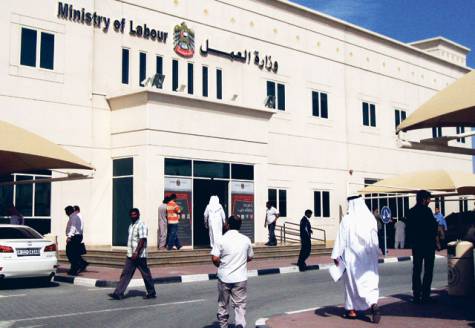
The Ministry of Labour _ Dubai November 19th, 2015 H.E. Saqr Ghobash, Minister of Labour, said “The three new decrees, to start beginning of next year, meet wise leadership guidance are consistent with the Constitution and labour market requirements, they also promote the transition to the knowledge based economy as well as compatibility with international labour standards."
Ghobash confirmed that the stability the “Labour market is a reflection of the stability of the working relationship between both parties, something which is expected to be reinforced by those decisions that would establish a better relationship between the employer and workers due to transparency of the unified contracts. Also enable workers to shift to other firms at any time preserving their rights, all in accordance to regulations set forth, which enhances the UAE labour market mobility and flexibility."
The Minister of Labour put forth his statement while meeting over 300 ministry employees and legal scholars to review and discuss the upcoming decrees, in the presence of Mubarak Saeed Al Dhahiri, MoL Undersecretary and Humaid bin Deemas Al Suwaidi, Assistant Undersecretary for Labour Affairs and Dr. Omar Al-Nuaimi Assistant Undersecretary for Policy and Strategy.
"Files highlighting Labour Rights by the Human Rights watch is one of the most vital issues of concern, urging us to provide them protection and rights preservation, and so following the vision of His Highness Sheikh Mohammed bin Rashid Al Maktoum, UAE Vice President and Prime Minister and Ruler of Dubai to be the ‘Number One’ Nation globally, maintaining rights is definitely a core value, hence, three new decrees coming up," Ghobash said.
"The three resolutions came after building a strong economy and adds to legislations accomplished by the ministry over the past couple of years to reach a stabile labour market to achieve the UAE 2021 vision of creating a stable labour market and a productive workforce to promote a competitive knowledge-based economy that revolves around UAE citizens, including an emphasis on providing better protection to workers' rights and ensure while insuring employers, whom welcomed the new decrees, interests are being kept and maintained,” he said.
The minister praised govt. employees capabilities and contributions to institutional development and expressed his confidence in their ability to properly implement the new decisions to achieve marked objectives. Similarly, efforts by legal scholars had not gone unnoticed, the ministry stated that they handle labor disputes fairly and work endlessly to find amicable solutions to preserve their rights.
On the sidelines of the meeting, a workshop was held by his excellency Humaid bin Deemas Al Suwaidi, Assistant Undersecretary for Labour Affairs, to explain texts of each of the three new decrees and implementation procedures.
Following on inquiries Legal Counsel Karem Abdul Latif together with Mohammed Mubarak Director of Labour Relations Office in Dubai replied to all concerns questioned.
The first decree requires employee signature preceding a contract renewal to obtain a new work permit, something which will be hereby terminate procedures currently implemented to renew work permits after only receiving a notification through the employer stating that both ends agreed to renew the contract, stating all privileges and requirements enclosed in the contract to be renewed.
Workers, under the new procedures, shall enjoy better options of either accepting to renew the contract according to marked privileges and stipulated requirements in the new contract, or amend these privileges and conditions upon agreement by both parties, which actively contributes to promoting a strong working relationship, or on the other hand enable employees to completely end the relationship search for alternatives or return back home.
The second decree, points six cases of labour contract termination for fixed-term contracts and four cases for non-term contracts.
Additionally, the third decree regards terms and conditions of granting a new work permit to worker who choose to end a working relationship through four cases to issue a permit if the contract between both ends was a fixed-term contract and three cases for non-term ones, something which promotes flexible mobility and maintains labour market competencies and exchange experiences internally.